Thursday, February 2, 2012

5 Movie Costumes I Love (Winter '12 Edition)


It's that time again. Time to lace up the corsets, roll up the measuring tapes, and sketch my five movie costume favorites for this winter. For those of you who don't know what I'm talking about, I have a tradition on this blog. For each season, I pick five random movie costumes to talk about. I started this tradition because I love analyzing costume on film and making it a seasonal event allows me to give time to some less-famous ensembles. Sometimes I succumb to glamor and pick a dress that wows me but other times, I just want to talk about something that suits the character. None of my five picks today are appropriate for winter wear but oh well, it will be spring soon.

One last thing to mention. As before, my three cardinal rules for this list are as follows:
  1. Absolutely no costumes from an Alfred Hitchcock film.
  2. No costumes worn by Grace Kelly.
  3. No costumes worn by Audrey Hepburn.

And now, let us begin.

1. Lana Turner in The Bad and the Beautiful
Costume Design by Helen Rose
("The Pajamas")

(photo credited to Film Noir Photos)

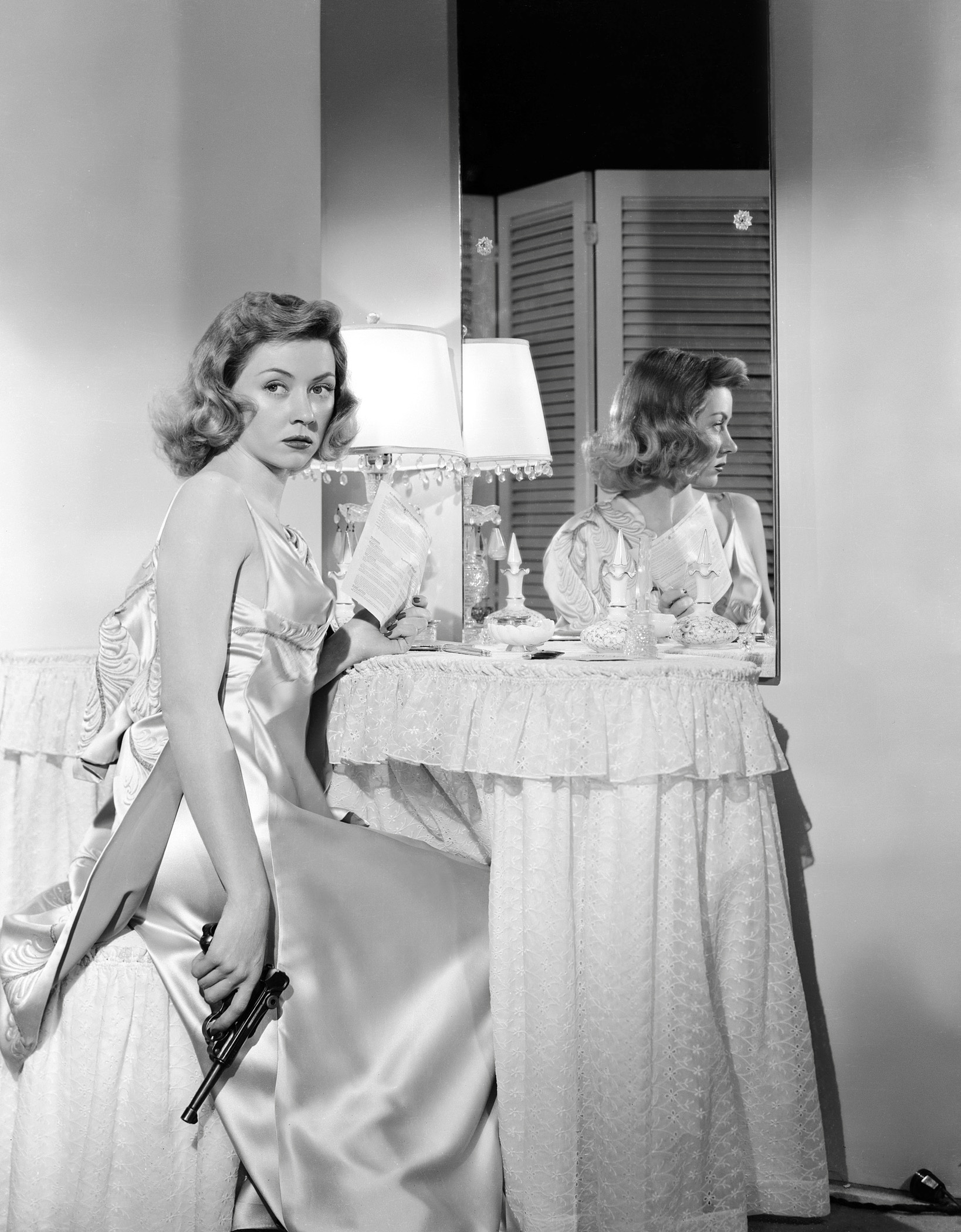
I know that singling out the pajamas in a Helen Rose/Lana Turner collaboration is a little like going to a gourmet restaurant and then raving about the after-dinner mints. But for me, one of the most thrilling moments in The Bad and the Beautiful is when Lana Turner, our Lady of Platinum and Plenty, emerges from a darkened room in these plain, ordinary pajamas. We've already been prepped that Turner's character, the tormented Georgia Lorrison, is a sexy lush and so we'd expect her to sleep in something more like this. Instead, we get the unforgettable image of Turner as an unhappy little girl in loose pajamas, huddled in a shabby room while Kirk Douglas tears her pretensions apart and her father's voice blares out poetry on the gramophone. Normally, I find Lana Turner's acting about as interesting as unsalted butter, but for that scene, I'm hers completely.

2. Marilyn Monroe in Gentlemen Prefer Blondes
Costume Design by Travilla
("The Blue Suit")


I really should have made a rule against posting Marilyn Monroe costumes too, since she's every bit as iconic as Hepburn or Kelly. But for now, I'm going to take advantage of my own loophole to mention my personal favorite, this bright blue-violet number from Gentlemen Prefer Blondes. It's one of the few costumes of hers that I could actually imagine wearing myself. Sure it's sexy (how many Marilyn costumes can you name that aren't?) but it's got that sharp snap to the collar and sleek skirt and form-fitting jacket. Nothing soft or cuddly about this; Monroe looks positively like a business woman. Watch how she dispatches her fiance's father with one cool, self-possessed speech. "I'm not trying to fool you. But I bet I could, though." Hell yeah, she could.

3. Douglas Fairbanks, Jr. in The Prisoner of Zenda
Costume Design by Ernest Dryden
("The Uniform")


Nobody does it better than Rupert of Hentzau, probably the best role Douglas Fairbanks Jr. ever had. Rupert is one of the most enjoyable villains of all time. Always laughing, always disloyal, and always teetering on the edge of sanity. Our hero Ronald Colman trades him quip for quip, but he's still no match for Fairbanks' cool. And lucky for Fairbanks, he got to play one of his best roles in this dashing uniform, complete with a black silk shirt and a pair of ever-present gloves. It's easy for a man to look smart in uniform, but Fairbanks just wears the hell out of this thing. Slanting his cap to give his leer that extra special touch. And the way he giggles into his gloves, almost biting his own fingers. And when he strips down to the black shirt, he looks like the most stylish man in the room, easily outpacing Colman. Sorry guys, but evil wins this round.

4. Gloria Grahame in In a Lonely Place
Costume Design by Jean Louis
("The Buttoned-Up Outfit")

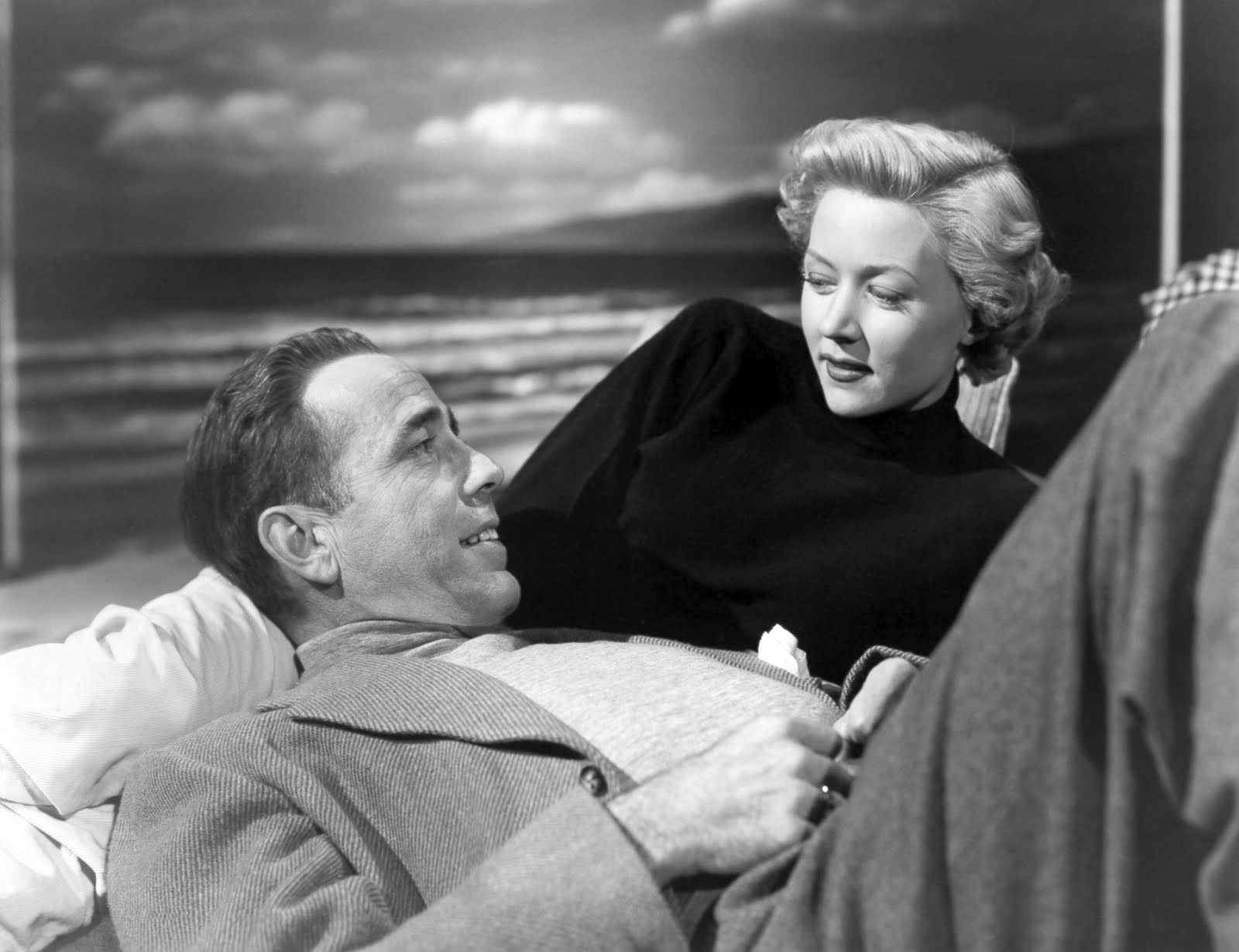
(Screencap credited to xoxoxo e blog)

"She's not coy or cute or corny. She's a good guy, I'm glad she's on my side." So says Humphrey Bogart, as he admires the cool, composed Gloria Grahame. First impressions are everything and watching the way Grahame strides down the walk in that straight-lined skirt and turtleneck, it's hard not to agree with Bogart's assessment. But in spite of the costume's simplicity, it gives us clues to Grahame's whole character. There's the marching line of buttons down the side. Stylish yes, but closed off, controlled. Barely an inch of skin showing. And the way Grahame moves in it; no Violet Bick-style wiggling here. If Bogart had looked a little more closely, he might have realized that here was a woman who's not going to give herself away so easily. Watching the movie again, I was struck by just how many of Grahame's costumes cover her up, right down to the fur-cuffed robe that hides the restless motions of her fingers. The tragedy of In a Lonely Place is that Grahame and Bogart really believe that they have control, that they are covered-up. But in the end, they don't just surrender to their feelings. They're crushed by them.

5. Maureen O'Hara in The Quiet Man
Costume Design by Adele Palmer
("The Red and Blue")


Call it a triple victory for director John Ford, cinematographer Winton C. Hoch, and costumer Adele Palmer. Nobody ever forgets that moment when John Wayne sees Maureen O'Hara for the first time. Ford gives us only a brief flash of blue and red before he cuts to O'Hara's radiant face, staring back at Wayne with complete wonder. The emotion of the moment belongs to Ford and the actors. But it's Palmer who gives us those graceful lines and that brilliant blaze of primary color. It's more than just showing off O'Hara's beauty; she's become a living symbol of Ireland itself. Blame The Quiet Man for convincing so many generations of Americans that if they went to Ireland, they'd find Maureen O'Hara waiting for them.

The Yvonne de Carlo photo at top is credited to the wonderful Dsata at Pictures Blog. Go visit her, she's one of the best sources for actress photos on the web and she organizes everything by theme, from "women bathing their feet" to "stars eating grapes." You can find everything there.

Tuesday, January 31, 2012

The Classic Movie Blog Association


My friends, I come bearing some happy news. I've just joined the Classic Movie Blog Association! For those who don't know, that means I've just been elevated to the shining ranks of a group of very talented, dedicated classic movie bloggers. I get a nice new button to put up on my blog, I get to participate in the CMBA's official blogathons, and I get to spend more time with some of the coolest people online (or off it for that matter). By the way, the CMBA is still accepting new members until May 31st so if anyone's considering joining up, I highly recommend it. No membership dues required, just love of classic film and a blog that's at least 3 months old.


Thanks to everybody who's been sending me their congratulations! I've got some posts brewing for February so stay tuned, my beloved readers.


Thursday, January 26, 2012

Movie Review: The Gunfighter

The Gunfighter (1950) 
directed by Henry King, starring Gregory Peck, Helen Westcott

Jimmy Ringo (Gregory Peck) may be the fastest gun in the West but even he can't shoot fast enough to keep up with his own deadly reputation. Everywhere he goes, some itchy gunfighter is just dying to challenge him and earn a name for themselves. But Ringo is tired of the fighting and the killing. After disposing of one overeager young buck (Richard Jaeckel), Ringo is forced to skip town early, with the boy's three angry brothers on his tail.

He makes his way to the small, quiet town of Cayenne, hoping to reunite with his old sweetheart Peggy Walsh (Helen Westcott) and their young son. But the town soon finds out that the notorious gunman is in town and they all crowd around the local saloon, from the little boys to the local barflies, hoping to catch a glimpse of him. The local sheriff Mark Strett (Millard Mitchell), an old friend of Ringo's, has his hands full trying to keep the peace and begs Ringo to leave. But Ringo won't leave until he talks to Peggy, even as she swears up and down that she'll have nothing to do with him.

Meanwhile, the local tough, Hunt Bromley (Skip Homeier), is hanging around, hoping to take a shot at Ringo himself, and a grieving father (Cliff Clark) is out for Ringo's blood too. The clock keeps on ticking and Ringo's enemies are drawing closer but the gunfighter refuses to leave town. Peggy and his son are his last shot at freedom and he's got to try. Just five more minutes and then he'll go...


I realized that I hadn't reviewed a Western on this site yet and decided to start making up for it with The Gunfighter, a much-respected but relatively lesser-known classic. It's a story with elements that feels achingly familiar to even a casual Western fan. A tough and weary gunman wants to retire, his enemies are after him, there's the promise of revenge and love and death in a small, dusty town. But in 1950, when the film first came out, it made the critics sit up in surprise at its cold-sober approach to the mythical gunslingers of the West.

It begins at the end, after the glamor and violence have taken their toll. Our hero is a dusty, depressed man (with a period-appropriate mustache no less), hanging out in saloons and back rooms. He can't even order a drink without some cocky kid trying to pull a gun on him. There's no noble cause for him to fight, not even a worthy villain to take down. Just the grim and unpleasant business of survival. Other later Westerns would take similar tacks. We would get the unhappy, underpaid gunmen of The Magnificent Seven, the lonely Shane, the bloody bandits of The Wild Bunch, and the secretly sadistic Will Munny of Unforgiven. But The Gunfighter still stands apart, even today, for its cool simplicity. There are no heroes or anti-heroes or even villains. There are men with guns.


The Gunfighter came to life from a chance remark made by Jack Dempsey, at a dinner with screenwriter William Bowers. The former heavyweight told him that everybody always wanted to take a punch at him, because he was the champ. This sparked something and Bowers, with the help of writer-director Andre de Toth, spun the tale of a Western gunslinger cursed by his own fame. Originally, The Gunfighter was intended to be a John Wayne picture. There are conflicting stories as to what happened (Greenbriar Pictures has an excellent rundown of the film's history) but ultimately, Wayne was left nursing a grudge and the role went to Gregory Peck at Twentieth Century Fox.

Darryl F. Zanuck had already seen one "thinking man's Western" crash and burn at the box office with The Ox-Bow Incident and he saw similar danger signs in The Gunfighter. "It is unquestionably a minor classic, but...it violates so many true Western traditions that it goes over the heads of the type of people who patronize Westerns," he said in a memo. "But on the other hand," shrugged Zanuck, "there was no formula mold about The Snake Pit and look what it did."


Putting Gregory Peck in the John Wayne role is the kind of casting choice that could give you whiplash. "He don't look so tough to me," is a constant refrain throughout The Gunfighter and you can imagine a disgruntled Wayne saying the same thing. But Peck uses that to his advantage here because of course, Ringo's reputation has grown far larger than the man can possibly sustain. He may be "tough" in the way he shoots a gun and stares down a bullet, but he's been reduced to popping off the pipsqueak kids who get in his way. Peck conveys much of that through his body language; he walks stiffly, he sits with his back hunched over and his arms held tight to his body, as if trying futilely to make his long limbs look smaller.

As Jimmy Ringo, Peck is more than just credible. He's heartbreaking. It's a portrait of a man whose life has essentially been whittled down to saloons and pointless fights, without even a drinking problem to keep him company. The only thing he has to hold onto is the promise of a new life with his love Peggy. When Ringo and Peggy finally meet, all Peck's tough-guy talk evaporates and he babbles on excitedly about running away to South America together. "We can make it, honey, we can make it," he says to her, clutching her like she's a life preserver. But in his face, we can see the truth.

Even better is the moment when Peck confronts an outraged citizen of Cayenne, who tries in vain to shoot him. "You killed my son--Roy Marlowe, remember?" the man tells him. Ringo doesn't recognize the name and the man sneers at him. "You killed him all right, but you don't even remember it." Peck denies it, stone-faced, but his eyes flicker for a split second. He hustles the man into a spare jail cell, telling him, "you're not safe running around loose." Peck voice sounds reasonable and sincere enough, but he shades his reaction just enough to show Ringo's fear at the thought that he can no longer keep track of the men he's murdered.


The film's biggest asset though, even more than Peck, is its claustrophobic and near-flawless screenplay. The screenwriters are canny enough to insert a ticking clock almost as perfect as the one in High Noon: Ringo can only stay in Cayenne for so long before three vengeful brothers catch up with him. His friends beg him to leave in a hurry but Ringo delays, hoping to see Peggy. Forced to hide from the town, he is consigned to bare dusty rooms and empty hallways, while the townsfolk eye him from the windows. Westerns are usually synonymous with open space and expansion but The Gunfighter refuses to give its hero (or its audience) any breathing room.


Later Westerns like Shane and The Magnificent Seven would follow The Gunfighter's portrayal of gunslinging as a cruel, lonely life. But few Westerns are as willing to be so resolutely anti-glamorous as this film. Even Unforgiven was kind enough to give its antihero a thunderously evil villain to fight against. Here, Jimmy Ringo must content with a series of idiot kids who constantly want to challenge him, like the ridiculously weaselly Skip Homeier (looking like a former member of the Dead End Kids). We see these numskulls in Western films all the time but usually they get picked off in the first five minutes. Here, they just keep coming. It makes gunslinging look about as much fun as being a professional fly-swatter. 


Prior to this, I only knew Millard Mitchell as the blustering R.F. from Singin in the Rain, the world's most understanding studio head. But he's unexpectedly marvelous here as the wise and weary Marshal Mark Strett. Mark takes one look at Ringo and knows exactly what kind of trouble has walked into his town. Ringo assures him, smiling, that he isn't going to start anything. Mark studies his old friend coolly, a hint of sarcasm in his voice. "You sure?" Mitchell doesn't look much like a former tough guy, but he makes up for it with the simple, understated intelligence he gives to Mark. This is a man who can square the local toughs and pacify the village matrons, all without raising his voice. Next to him, Peck looks like an anxious, eager kid.

In addition to Mitchell, we have the ever-welcome presence of Karl Malden, as the grinning, fawning barkeeper Mac. Mac remembers Jimmy Ringo from the old days and he's happy to reminisce, fussing over him and offering him favors. Compared to the rest of the would-be alpha males in the film, Mac seems practically emasculated. He always walks around in a white apron, the little boys in town jeer and throw things at him. Even a skinny tough like Skip Homeier is enough to intimidate him. Malden retreats, eager to smile and pacify. But there's a darker side to all Mac's niceness. As Ringo gets ready to leave, Mac tells him that from now on, "this place'll be famous, it'll be like a shrine." Ringo jokes that maybe he should get money for that. Mac stares back at him, dead serious. "Why not? You're the one that's done it." Mac might like Ringo well enough as a person, but he likes him even more as publicity.


Unfortunately, two of the film's most crucial characters, Peggy Walsh and her son Jimmy, are played to lackluster effect by Helen Westcott and B.G. Norman. Westcott is young and pretty and she certainly carries herself like a prim schoolmarm. She rejects Ringo, not with anger but with blank weariness, and you sense that the defects in her husband's nature are as familiar to her as the multiplication table. But she's a little too stiff and cool; she doesn't act like a woman who ever had much passion to smother. When she and Ringo finally meet, there's no sense of the history crackling between them. How did she ever wind up as a gunman's girl?


B.G. Norman, playing the small but vital role of Ringo's kid Jimmy, is worse. He's like a transplant from 1950s suburbia, all "gosh" and "huh" and "aw shucks." Norman can't help the dialogue he's being asked to play but it's clear that little was expected from him outside of generic cuteness. In the pivotal meeting between Ringo and his son, it's Gregory Peck who has to carry all the emotional weight. Which he does, tremendously. He looks at Norman with barely concealed wonder and longing even as he gruffly tries to give the boy a few life lessons. Don't bust into a room, don't draw on an unarmed man, don't tangle with the tough guys. For all Peck's stentorian wisdom, there's very little of Atticus Finch in this performance. This is a man fumbling to fill a decade's worth of fathering in the space of five minutes.


Western heroes, like their distant cousins in film noir, always seem to know that they live on borrowed time. When death finally catches up to them, it carries the ring of inevitable. For Jimmy Ringo, the only question is who will finally be the one to do for him. But, as The Gunfighter makes clear, sometimes the answer to that question doesn't mean a damn thing. Gunfighters die but the game goes on.

Favorite Quote:

"Here I am, thirty-five years old and I ain't even got a good watch."

Favorite Scene:

The Gunfighter is a film wound as tightly as the watch Gregory Peck doesn't have. Trying to pick it apart to find a favorite scene is difficult but I'll try. Jimmy Ringo is in Mac's saloon, waiting impatiently for news of Peggy. Peck rocks back and forth in his chair, barely able to keep his composure. From outside, we can hear the chatter and giggles of children. Mac comes over to him, chatting jovially over a fresh bottle. Then one little boy peeks his head from under the door of the saloon, grinning openly at Ringo. The camera pans to two more boys glued to the window. "Somebody chase those kids out of there! Haven't you got a school for 'em?" Peck barks, jumping to his feet. Mac assures him that he can make the kids leave and rushes out, shooing them away. We see that it's not just little boys, but grown men too, laughing and jeering, unable to keep away. 

A few of the boys retreat, only to throw snow at the anxious mother hen Mac. One of the ladies of the town grabs the instigator (Ringo's son, it turns out). "Just you wait 'til your mother hears about this!" she snaps. The boy responds with one of the standard answers, "We're not hurting anybody." He's not defensive, he's completely sincere. And you realize that none of these people, from the boys to the men, understand what they want from Ringo. They don't think they're there to hurt him, but they can't keep away from him. The crowd continues to fishbowl Ringo and even after the scene ends, there is never a moment in the film where you don't feel their presence. Their attraction and aggression to Ringo just draws them in. The language of The Gunfighter is serious and civilized, but the image of those people crowding mindlessly around the saloon, staring longingly in at Ringo, is a slap in the face to anyone who thinks we're that far removed from the animals.

Final Six Words:

No heroes here, only dead dreamers

Tuesday, January 17, 2012

News on the March


"Are you one of those talkers or would you be interested in a little action--I mean, blogging?"  
Well, the holiday season is truly over. My bank account's been razed, the winter winds are howling at my door, and right now I feel like following Judy Holliday's example and just snuggling in bed with something to read. And William Holden's invited too, provided he keeps the glasses on. But while I may be fighting my own lazy instincts at the moment, that doesn't mean that other people haven't been keeping busy.  Here's some news that should be enough to warm any classic movie lover's heart, whether they're fighting the weather, fighting the blues, or fighting the urge to argue over whether the Golden Globes mean anything.


A Month of Vertigo Blogathon (January 1-31st), Hosted by The Lady Eve's Reel Life 
"Arriving with 2012 will be this blog’s first major event, A Month of VERTIGO.  The month will feature 10 bloggers and one ‘vlogger' reflecting on facets of Alfred Hitchcock’s Vertigo (1958).  Unpopular with critics and audiences when it was released, Vertigo has endured. Today it is generally considered the great auteur's masterpiece of masterpieces and is one of the most highly regarded films in movie history. Vertigo is an ambitious work of grand scale and reputation - a staggering review subject for the lone blogger. And so, we eleven have joined together to contemplate this masterwork from many angles."
I'm assuming most of you have already heard by now of A Month of Vertigo over at The Lady Eve's Reel Life. But that isn't going to stop me from telling you about it. The first time I heard about this, I thought it was an incredibly brilliant idea. To devote one month to a single film, looking at it from every possible direction, bringing in a talented group of commentators...I have to admit, I'm a little jealous the Lady Eve thought of it first. And it's Vertigo, one of my most cherished cinematic obsessions (well, Vertigo is a film you just can't be casual about). I've been happily basking in the entries thus far and there's still plenty to go, as A Month of Vertigo continues. Go check it out!


The Comedy Classics Blogathon (January 22nd-27th, 2012), Hosted by the Classic Movie Blog Association 

The ever-diligent, ever-witty members of CMBA are at it again with another great blogathon, a salute to their favorite comedic films and the masterminds behind them. I've been going over the list of participants and already I can't wait. Hey, did you see that Dorian from Tales of the Easily Distracted is going to write about Ball of Fire? And the gals over at True Classics are going to tackle The Great McGinty? And hey look, Dawn from Noir and Chick Flicks is taking a look at Gene Tierney's romantic comedies and Monty's going to write about His Girl Friday and okay, I'm not going to type up the whole list. But seriously. I'm going to be glued to this blogathon and so should you be.


Movies from an Alternate Universe, from Peter Stults's Portfolio

Many thanks to Brian Phelan over at the wonderful blog The Stuff Dreams Are Made Of for linking me to this. Behold, an artist's reimagining of contemporary films with classic casts, complete with posters. Some of his choices are smack-your-head-and-shout-of-course obvious (James Dean in Drive) and some have a kind of gonzo inspiration to them (I particularly like the idea of Ken Russell directing The Big Lebowski). Hell, some of his choices sound preferable to the real films. I'm not familiar with Peter Stults's work, but I notice he also has a nice little entry of Classics Gone B-Movies. Anyone who can dream up a poster like this is a man after my own heart.


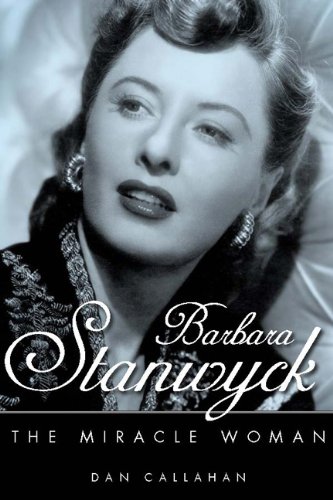
And coming to bookstores in February 2012, Dan Callahan's biography, "Barbara Stanwyck: The Miracle Woman"

I love entertainment biographies. Well, no scratch that, I love good entertainment biographies. And 2011 sure was a banner year for them wasn't it? Roger Ebert, Pauline Kael, Spencer Tracy, Myrna Loy, Steve McQueen, James Garner, Piper Laurie, Jane Fonda, and many others I'm sure I've overlooked. But the biography I've been looking forward to for awhile (seriously it's been sitting on my Amazon wishlist for the last few months) is Dan Callahan's upcoming biography of Barbara Stanwyck. I can't tell you how I've been pining for a in-depth, well-researched biography of my favorite actress. Considering the weight and longevity of Stanwyck's career, her flourishing fan base, and the many mysteries of her personal life, it amazes me that Stanwyck bios are few and far between. So, I'm really excited about this upcoming book and I could wish no better writer for it than Dan Callahan. This is a man who knows film, knows it and loves it and writes about it marvelously. I don't normally advertise books I haven't read yet, but in this case? I'm going to take a chance and say that this one's going to be a great read.

Fun times ahead, guys! Now if I could just work up the energy to leave my nice, warm apartment but like Judy, I just feel too darn comfortable. Here's wishing a few lazy days in your direction.

Wednesday, December 28, 2011

The New Year's Movie Meme


The Girl with the White Parasol has just hit 50 followers! Guys, I'm so thrilled. I mean, I know I shouldn't wax rhapsodic over my follower count. After all, blogging is a serious creative endeavor and I'm only in it for the art and...and...ah, screw it, I love having followers. I love knowing that people are reading this blog and thinking about it. I want you to know how much I appreciate having such smart, funny, and kind readers. You're the best.

I thought a lot about what I'd do to mark this special occasion. Normally, I might just post pictures of people throwing confetti but you know, I wanted to do a little more. And I realized that what I've been missing lately is a good movie meme. I love movie memes; it's so much fun for me to read people's answers and find out about their tastes. And now that I have more readers, I'm eager to find out more about them.

So, I've decided to roll up my sleeves and just send my own little meme out into the blogosphere. 12 random movie-related questions for any out there who want to post their answers. If you do decide to answer, please post the meme on your blog, with a link back. And if you'd like to respond but don't have a blog, I invite you to give your answers in the comment section. Feel free to tag as many people as you wish.

Here it is, The New Year's Movie Meme. Yes, I know it's a little early for New Year's but I had to think of something for the title. I couldn't just call it Random Movie Meme.

1. What is your all-time favorite Grace Kelly costume?

2. What classic film would you nominate for a remake?

3. Name your favorite femme fatale.

4. Name the best movie with the word "heaven" in its title.

5. Describe the worst performance by a child actor that you’ve ever seen (since Laura gave me the idea).

6. Who gets your vote for most tragic movie monster?

7. What is the one Western that you would recommend to anybody?

8. Who is your ideal movie-viewing partner?

9. Has a film ever made you want to change your life? If so, what was the film?

10. Think of one performer that you truly love. Now think of one scene/movie/performance of theirs that is too uncomfortable for you to watch.

11. On the flip side, think of one really good scene/performance/movie from a performer that you truly loathe.  

12. And finally, since it will be New Year's soon, do you have any movie or blogging-related resolutions for 2012?

Have fun, guys! Hope to see you in 2012!

Friday, December 23, 2011

Merry Christmas to All


Christmas hath a darkness
Brighter than the blazing noon,
Christmas hath a chillness
Warmer than the heat of June

Well my friends, the time has come. The holiday season is here. Whether you're flying many miles away or driving over ice or cuddling in front of a fire or cursing out last-minute shoppers, I wish you the very best. Whether and whatever you celebrate this time of year, I hope that everything is joyful and bright. I'll be back after Christmas. See you then.

Love, 
           Rachel

Lines from Christina Rosetti. Image taken from an illustration by Harold Von Schmidt. Did I mention that Today's Inspiration has become my latest obsession?

Wednesday, December 21, 2011

Movie Review: The Wicked Lady

The Wicked Lady (1945)
directed by Leslie Arliss, starring Margaret Lockwood, Patricia Roc, James Mason

We open upon the sweet, chaste, 17th-century courtship of Caroline (Patricia Roc) and Sir Ralph Skelton (Griffith Jones) as they ride through his estates, singing and laughing. Caroline is especially eager for Ralph to meet her exciting and beautiful cousin Barbara (Margaret Lockwood), who's coming to visit before their wedding. When Barbara arrives, however, she quickly proves to be a far more exciting guest than Caroline expected. In short order, Barbara seduces Ralph away from her cousin, forcing the heartbroken Caroline to be her maid of honor.

But Barbara can't enjoy her victory for long. On her wedding night, she meets the dashing Kit Locksby (Michael Rennie) and it's love at first sight--right before Barbara is dragged off to her waiting husband. Her nighttime duties aside, Barbara has no interest in all the boring responsibility that comes with being Lady Skelton. She leaves all the housekeeping to the ever-masochistic Caroline, while she sighs and frets and dreams of London.

One night, while playing cards with Sir Ralph's catty sister Henrietta (Enid Stamp-Taylor), Barbara impulsively bets it all and loses her dead mother's brooch. Determined to get it back, Barbara poses as the notorious highwayman Captain Jerry Jackson and robs Henrietta on the road. The adrenaline rush of robbery turns out to be just what Barbara was craving and she takes to the roads again. Only this time, Barbara meets the real Jerry Jackson (James Mason). Jackson is taken aback, but is quickly won over her beauty, spirit and black little heart. They become partners in crime...and in the bedroom. Finally, it seems like Barbara has found her true place in life.

But, as wicked and wily as Barbara is, she soon becomes reckless. She wants more gold, more thrills and even Jackson thinks she's taking it too far. Then one night, a high-stakes robbery turns into murder. And that murder soon necessitates another murder. Barbara's schemes spiral out of control and she finds herself in a fight, not for money or a man, but for her very life.


Imagine those tired British audiences of 1945,  piling into movie theaters to escape from the horrors they had lived through and the long rebuilding that would follow. Life was harsh and they wanted something to help them through it. But what?

Well, if the runaway box-office success of The Wicked Lady is any indication, what they wanted was kinky sex. Lots of kink. They wanted to see Margaret Lockwood in corsets so tight they had to be censored for U.S. audiences. They wanted to watch her do wicked, awful things like shooting people and poisoning them and sleeping with James Mason outside on the grass. They wanted to see Patricia Roc and Margaret Lockwood get into a slap-fight. They wanted to see cross-dressing and secret passages and noblewomen seducing robbers. The Wicked Lady was the box-office smash of 1946, outdoing its more serious competition by a mile. Critics hated it, audiences loved it. And looking at it now, over 60 years later, I have to side with the audiences. This movie is pure fun from start to finish.


The Wicked Lady was based on a novel called The Life and Death of the Wicked Lady Skelton. (You have to wonder why the author didn't just go all the way and call it "The Most Excellent and Lamentable Tragedy"). The novel was itself inspired by an old English legend about a noblewoman who secretly spent her nights as a highway robber. That was the hook of the story; from there, it spiraled into a melodrama about a treacherous woman, her outlaw lover, and their bloody romance. Considering its plot elements, The Wicked Lady should play as pure camp. And yet, thanks to the deft hand of the Gainsborough studios and a talented cast, the film somehow avoids this. It's sharp, funny, fast-paced, and not above winking at its own silliness.

A strong share of the credit must be given to Leslie Arliss, who both wrote and directed the film. In 1943, he had directed the smash hit The Man in Grey, cited as the first of the Gainsborough melodramas. For The Wicked Lady, Arliss repeated many of the same elements that had made The Man in Grey a success: period setting, a sexy and violent plot, alluring costumes, and a witty, unpretentious screenplay. It was a critic-proof, audience-friendly formula. And to cap it all off, he had the benefit of two great stars, both of whom had seen their careers skyrocket after The Man in Grey: James Mason and Margaret Lockwood.


Margaret Lockwood delivers a knockout performance here as the evil but irresistible Barbara. It's all but impossible to watch her sailing through this film, merrily breaking hearts and bodies and bank accounts and not root for her to get away with it. Just watch her in the scene where she convinces her cousin Caroline to give up the man she's engaged to so that he can marry Barbara instead. Barbara plays on her cousin's sense of honor until the tearful girl has promised, not just to give up Ralph, but to be Barbara's maid of honor. "And you can have my wedding dress, too, if you like," Caroline tells her, fleeing the scene in tears. At this, Barbara's back straightens and her eyes twinkle. "Wear that? I wouldn't be be buried in it."

Barbara may not be the most threatening or subtle of 40's femme fatales, but few actresses seemed to take so much sheer sensual pleasure out of their own wickedness as Margaret Lockwood does here. She devours each scene with such glee you half expect her to be licking her fingers after each take. And she isn't shy about playing up the sexual nature of the character either. In a scene where Barbara must convince a suspicious old man that she has found religion, Lockwood kneels and looks up at him through her lashes in a way that suggests, not repentance, but bedroom roleplay. And in the scenes when Lockwood struts around in male attire, brandishing a pistol, it's hard not to look at her and think that Barbara is indulging her inner dominatrix.


With the exception of James Mason, the other actors have the unenviable task of playing clueless pawns in Barbara's schemes. And considering just how obvious Barbara's bad intentions are, that's really clueless. Griffith Jones, as the unhappy Sir Ralph and Michael Rennie, as the dashing Kit, are both effective in their small roles as men who are all too easily enraptured by Barbara (At times, Jones looks like a nervous schoolboy who got caught sneaking a peek down a girl's blouse). But it's Patricia Roc, as the requisite good girl Caroline, who gets the best moments.


Like Margaret Lockwood and Jameson Mason, Patricia Roc was one of the stalwarts of the Gainsborough studios. In spite of her own sensual beauty, Roc has to play the good girl here and she does some interesting things with it. Even though her character is written as sweet and innocent, Roc projects a kind of brisk intelligence and discomfort . She understands what's happening pretty early on, but keeps trying to pretend that everything is fine.  And in the scene where Caroline, as Barbara's maid of honor, has to invite the man she loves into another woman's bed, Roc's heartbreak is utterly convincing. For a moment, Barbara's cruelty doesn't seem so fun.

However, the machinations of the plot mean that Roc has to act pretty spineless for a good part of the movie and sympathy shifts back to Lockwood. Still, at least Roc gets one good scene where she gets to slap the husband-stealing bitch right across the face (a moment that no doubt thrilled the 1940s audiences). In real life, Roc and Lockwood were great friends. And, as often happens, cinema inverted reality as it was Lockwood who was the reclusive, maternal teetotaler and Roc who was the sexually voracious good-time girl (her numerous affairs with married men earned her the nickname "Bed Roc").


The major scene-stealer to watch out for here is James Mason as the roguish bandit Jerry Jackson. Well, perhaps scene-stealing isn't the correct word as it's fairly clear that Gainsborough Studios were counting on Mason being the prime attraction for female moviegoers. Mason was fresh off his success in The Man in Grey as a cruel but dashing gentleman; a scene in which he beat Margaret Lockwood with a horsewhip had electrified audiences. His dark and brooding appeal had made him the most popular male star in Britain. The Wicked Lady even pokes fun at Mason's image with his character here. The female aristocrats gossip excitedly about what it would be like to be Jerry Jackson's next "victim." ("Is he very dashing? Did he make any ungentlemanly advances?" they ask one woman eagerly ) When Jackson is sentenced to hang, he's surrounded, not by jeering crowds, but by adoring female fans.

It's a shame that Mason's only around for part of the movie because he's got crackling chemistry with Lockwood, far better than any of the other characters. His character Jackson is the only one who truly understands Barbara. He knows she's no good and will probably ruin him, but hell, at least they'll have a good time while it lasts. The headlong sexual relationship between Lady Barbara and Jackson was pretty risque by 1940s standards. "Do you always take women by the throat?" Barbara asks him, after one rough encounter. "No, I just take 'em," Mason replies, deadpan.


Halfway through this film, I had an epiphany: "Great shades of Scarlett O'Hara, I'm watching Gone with the Wind!" Well, Gone with the Wind if you kicked it back two hundred years and smushed it together with "The Highwayman." You have the bitchy, green-eyed brunette (Scarlett/Barbara), who loathes her sweet, smiling friend (Melanie/Caroline) and angles to steal her man (Ashley/Sir Ralph). The man is weak and even though he loves the good girl, still helplessly lusts after the bad one. But the bad girl is the one we root for and the more outrageously she acts, the more enjoyable she becomes. However, The Wicked Lady splits up the Rhett role between Michael Rennie as Barbara's true love and James Mason as the one who truly understands her. Which was a mistake since Michael Rennie has less screentime with Margaret Lockwood than anybody else and yet the film would keep insisting that he and Lockwood were star-crossed lovers, that he was the only one who could change her nature. Very strange.

In one sense though, Gone with the Wind and The Wicked Lady are polar opposites. Because while Gone with the Wind's characters are intractable, stubbornly clinging to their ideas until the final reel, The Wicked Lady cast seems to change motivations with every breeze. Oh, Barbara saw Jackson with another woman so she betrays him. Whoops, five minutes later, she realizes he will now go after her so she is sorry. Oh, Ralph and Caroline have confessed their love. Wait, they can't be together. So Caroline's going to marry Kit. Oh no, she's going to marry Ralph after he divorces Barbara. Which is weird because five minutes ago Ralph was telling Kit he would kill him if he ran off with Barbara. Whew. See what I mean? It's the one glaring weakness of The Wicked Lady; it rounds the plot twists so quickly that sometimes things like character and common sense are left by the wayside. And yet, the film is so witty and fun that you have to forgive it.


I've heard some reviewers argue that The Wicked Lady is in fact a a hidden social commentary on the roles of British women. After all, we have a strong female character who merrily breaks every rule of the male-dominated society which tries (and fails) to control her. But for me, the social commentary of The Wicked Lady, especially when compared to films like Jezebel and Leave Her to Heaven, is about as incisive as an Archie comic. That's not a criticism. The Wicked Lady is smart because it knows what kind of story it is and it works to make that story as entertaining as possible. And it doesn't feel like a movie made by bored, indifferent people. Watching this film, you just know the cast and crew were having a blast.

Some films are so bad, they're good. But in this case, the lady is so very wicked that the film is very good indeed.

Favorite Quote:

"He's very lucky with the weather. Must be depressing to be hanged on a damp day."

Favorite Scene:

In a film with so many outsized dramatic moments, it's odd that my favorite scene is relatively normal. But I absolutely love the card game between Barbara Skelton and her most hated rival, Sir Ralph's sister Henrietta. These two are a delight in every scene they share, because they can't resist throwing jibes at each other, all the while keeping up the sweetest-possible smiles. It's like watching two Bengal tigers at a tea party. Example below:

Henrietta: "It’s hard to believe that six months could have changed you so much. You know, I used to quite envy you. You used to look so young and lovely.”
Barbara: “Oh, is it only six months? Then it must be the journey that tired you out. Traveling makes one look so bedraggled.”

And back and forth. But Henrietta's cleverest and darkest moment comes when she plays Barbara at cards. The impulsive Barbara is fast losing everything to her rival and, true to her nature, bets her most prized possession on a single turn of the cards. She loses and Henrietta smiles at her softly, with an expression a cat might give to the canary between its claws. She picks up her prize, a ruby brooch, and asks Barbara, "Your mother's wasn't it?" Barbara stiffens and you can see the light going out of her eyes. And right then and there, you know that Barbara will turn completely to evil. It's that look in her eyes. She would murder that woman for a brooch. Nothing Barbara does later, whether it's robbery or shooting or slow, cold-blooded poisoning, comes as a surprise after that moment.

Final Six Words:

A wicked, rollicking ride to hell