Showing posts with label Barbara Stanwyck. Show all posts

Saturday, July 5, 2014

Unsolved Mysteries of the Casting Department: (Part One) You Can't Win 'Em All


I've talked before on this blog about miscasting. It's one of my eternal fascinations. Not just the plainly ludicrous decisions like casting Susan Hayward as a Tartar princess or Denise Richards as a nuclear physicist. No, I'm more interested in those casting glitches where everything seems like it should perfectly line up and yet it still goes wrong. Why are some of the greatest acting legends of all time so stymied by roles that other, less talented people can carry off like gold medalists? So I decided to draw up a list, focusing not so much this time on just the movies but on the performers themselves. Why are great actors unable to play certain parts?

Please note that I'm aware some of my readers will fiercely disagree with my selections here. I welcome a good debate so feel free to bring up any rebuttal in the comments section. Also, since I never like dwelling too much on the negative, stay tuned for Part Two, where I talk about the times when seemingly miscast actors turned in great performances.

Without further ado, here's my list:
 
Cary Grant Can't Do Costume Pictures


Of all the great film stars, perhaps nobody was as skillful and deliberate in managing their career image as Cary Grant. He turned down roles other actors would have sold their entire toupee collections for and he ended up with a resume that's enough to send the nicest, most easygoing man in Hollywood reeling with sheer envy. He worked with the best directors, the greatest leading ladies. But there was famously one thing that Grant spent most of his career avoiding and that was this: he would not do historical costume pictures. After seeing himself in The Howards of Virginia, a critically reviled flop about the Revolutionary War, Grant said, "I don't belong in costumes." He stuck to that notion for seventeen years, until agreeing to star in The Pride and The Passion, another film that got a sound drubbing from critics and audiences alike.

The standard answer to why Cary Grant just doesn't seem right for costume pictures was that he was too modern. He was to the tuxedo born and nothing else would do. But I'm inclined to take issue with that a little. After all, he does a perfectly good job in Gunga Din and in that one, he was a good twenty years away from the twentieth century and nearly forty years from the nearest cocktail party. The man wore costumes well and while he looks admittedly kind of silly in The Howards of Virginia, if you just look at stills of him in The Pride and the Passion (the performance itself is another matter), he wears the old British naval uniform with perfect dignity. Grant's voice and mannerisms are distinctive of course, but if the public can accept Tony Curtis as a Greek slave and Clark Gable as a Southern gentleman and Robert Ryan as John the Baptist, why then is Grant singled out?

No, I think the reason lies somewhere in the fact that Grant is a natural clown. He needs to kid his surroundings to belong to them. If he tries to be self-serious, he turns stiff. And the problem is that most historical epic films are just that, they're epics. They're trying to preserve history like a monument and Grant is one actor that should never be set in marble. He can fit in just fine when the movie is a historical romp like Gunga Din. But if the subject is weighty, forget it. In short, I think he misfires in costume pictures for the exact opposite reason that Charlton Heston succeeds in them. Because Heston is serious enough to believe himself anywhere and Grant is smart enough to disbelieve himself everywhere.

Barbara Stanwyck Can't Play Ingenues


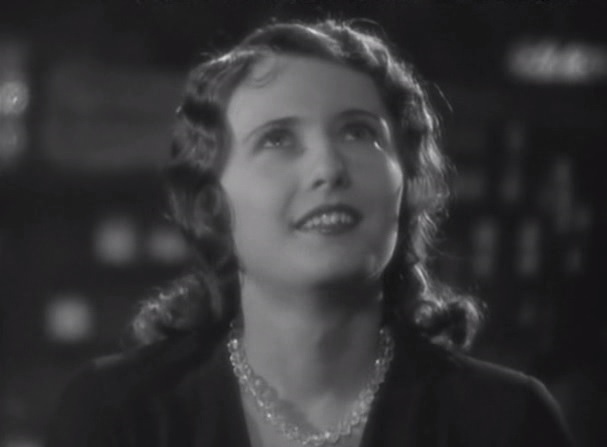
People who follow my blog know that I'm a firm believer in the "Barbara Stanwyck Can Do Pretty Much Anything" Doctrine. She could do comedy, Western, film noir, drama, crime, soap opera, horror, and do it all with no apparent effort. That alone makes her stand out from the other female acting icons like Crawford and Davis. They could reach her heights but they never rivaled her range.

The one gap I've really found in Stanwyck's career is this: she could never really play the innocent. Even in her earliest movies like Ladies of Leisure and Shopworn, she's already cynical and experienced, a young woman who's had plenty of hard knocks and starts to get suspicious if she can't see one coming. This characterization carried her through most of her career, but even for someone like Stanwyck, there were times when being a tough cookie just wouldn't cut it.

While Frank Capra can be credited as the director who discovered and refined Stanwyck's talent for hard-edged, secretly vulnerable women, he also gave her some fairly awkward roles as well. Take her part as the lovelorn, self-sacrificing heroine of Forbidden. The movie opens with Stanwyck as the shy, bespectacled librarian (!), who only opens up to life after she falls in love with dapper Adolphe Menjou (?). Remember that ridiculous scene in It's a Wonderful Life where we get the dreaded reveal of Donna Reeds, sans makeup, as the town's spinster librarian? Nearly the whole first half of Forbidden plays like that scene. Stanwyck can't even begin to settle into character until the second half, where she gets a new job and starts trading sexy banter with Ralph Bellamy (?). Capra would push Stanwyck's credibility even further by casting her as the naive missionary in The Bitter Tea of General Yen. But this is where it gets interesting. Stanwyck should, by all rights, be utterly wrong for this part. She's no sucker and she's no saint. Despite that though, Stanwyck manages to plow through the role because she plays the missionary, not for gentleness, but for bull-headed, stubborn pioneering spirit. She's deluded, but not soft.

By this point, I've seen fifty Barbara Stanwyck movies and I never cease to marvel at how Stanwyck takes the same tactic whenever they force her to play innocent girls. She plays them like bulldozers. Whether they're sweet wives smiling through their tears (Ten Cents a Dance), power-behind-the-throne spouses (The Great Man's Lady) or feisty Irish tomboys (Union Pacific), they're always 100% determined. It doesn't always fit the role, but it sure as hell fits Stanwyck and that's enough to lift the curse of miscasting.

Claudette Colbert Isn't Motherly


Clearly, Hollywood didn't agree with me on this one since it was happy to cast smiling, purring Claudette Colbert in quite a lot of maternal parts, particularly as she aged. Most famously there was Since You Went Away, with Colbert doing the American version of the Mrs. Miniver character, but there's also Imitation of Life, Tomorrow is Forever, Family Honeymoon, and Parrish. I can only speak for Imitation of Life and Tomorrow is Forever, but I can't help thinking that whenever that potent Colbert charm gets hit with a dose of syrupy sentimentality, the result is like a batch of rock candy. It glitters alright but it's too sweet to eat and too hardened to melt on your tongue. 

In Imitation of Life, Colbert is in top form whenever she has to run her business or trade banter with her friends. She's smart, witty, sophisticated, she's the epitome of everything you want Claudette Colbert to be. But the minute her bratty moppet of a daughter is onscreen, lisping and begging for her rubber duck (bet you didn't know that the actual closing line of Imitation of Life is "I want my quack-quack"), Colbert coos and giggles and plasters a warm, motherly smile on her face. It's about as artificial as it gets. It makes the ending of the film, in which Colbert agrees to postpone her wedding to Warren William until her teenage daughter gets over him, even more risible than it might otherwise have been. I can't watch Colbert getting all trembly and noble without wanting Sandra Dee to teleport in from the 1959 remake and snap, "Oh, mama, quit acting!"

The funny thing is, there is a strong note of "come-to-Mama" in Colbert's love scenes. Watch her in something like Cleopatra or Midnight and it's totally there in her mannerisms, in the way she bends over her leading men. She tends to them, she humors them, and all the time she knows she's wiser than they'll ever be. On her, it works and she's mesmerizingly sexy and confident. But when it comes to motherhood, or rather the oft-times sickly sweet, sentimental vision of motherhood that Hollywood went for in the '30s and '40s, Colbert just can't make it work. After all, it's pretty hard to look like you're burning with the sacrificial flame of unconditional love when you can't even be bothered to turn your head to the left.

Gregory Peck Can't Be Wicked

 
Of all our acting legends, I find Gregory Peck to be one of the most off-and-on in terms of what he can and can't do. Whenever I start to think he's overrated, I'll remember To Kill a Mockingbird and The Gunfighter and ask for forgiveness. Then, I catch a glimpse of him in something like Moby Dick or Cape Fear and gnash my teeth in frustration that these parts didn't go to actors who would make more of them. But just when I've decided that the man is hopelessly stiff and humorless, I'll catch a rerun of Roman Holiday and be enraptured all over again by how charming and romantic he can be. It's Audrey Hepburn's picture, but it's easy to forget how much support Peck gives her and how graciously he draws attention to her side. Really, for someone who came to embody straight-arrow decency in movies, the man is surprisingly mercurial in what he brings to the screen.

So many actors, especially those tagged as bland or boring, shine particularly bright when they get to play evil. Gene Tierney won her only Oscar nomination for playing a child-drowning madwoman in Leave Her to Heaven. Robert Montgomery got some of the best notices of his career for his turn as a psychopath in Night Must Fall. Robert Walker, cast over and over again as a boy next door, turned out to be one of the greatest villains in cinema as the complicated killer Bruno Anthony in Strangers On a Train. But Gregory Peck does not belong to this class. He is never worse than when he plays bad. 


Case in point is his performance as bad, bad Lewt McCanles in Duel in the Sun. He plays the dangerously seductive, totally amoral rancher's son who merrily proceeds to wreck Jennifer Jones' life, just because he can. At this point in his career, Peck was preternaturally gorgeous. He always had incredible screen presence. He looks like a man who could drive a woman to the brink. But his performance in Duel in the Sun is the most unconvincing thing ever, a weird combination of campy, over-the-top line readings and stilted boredom. To be fair, nobody really comes off that well, performance-wise, in Duel in the Sun. Still, I think there's a difference between the acting of Jones, who comes off more like a well-meaning performer undone by over-direction and bad scripting, and Peck, who just cannot fit this role. He's just not the wicked seducer. Having also seen him try to play a more redeemable version of the type in How the West Was Won, I think I can say that with some confidence.  However, I still haven't seen The Boys From Brazil, so maybe Peck finally does manage to unlock his evil self by playing a Nazi. I'll have my fingers crossed for him.

Gene Tierney Isn't Lower-Class


"I suppose you were a model of all the virtues when you were young."
"Certainly I was. I won a prize for deportment at school."

That bit of dialogue comes from The Ghost and Mrs. Muir but it could just as easily come from several other Gene Tierney movies, including nearly all her best ones (Laura, The Shanghai Gesture, Leave Her to Heaven, Dragonwyck, Heaven Can Wait). She belongs to that class of actresses (Grace Kelly is another), who can't help but remind you of the good little girl in the classroom, the one who wins all the prizes and has a stunning debutante ball when she turns eighteen. Onscreen, she's the born aristocrat. Well-bred, well-mannered, and smooth as silk. Tierney was often a harder actress to cast than she seems at first glance. She's not really warm onscreen, but there's a sweetness and mildness to her presence that's difficult to shake. This made her too cool and remote for "America's Sweetheart" roles and too nice for tarts or rebels. Her best parts could turn that to her advantage, letting her play women whose gentle nobility shone through in difficult circumstances. She could play costume parts with ease because that kind of feminine ideal half-belonged to another era anyway. And when she did play villainesses, as in Leave Her to Heaven or The Razor's Edge, she turned them into "good girls gone bad," women who probably had won prizes for deportment in school, women so perfect that of course they had to snap. The Shanghai Gesture takes that idea to a whole new level, giving us cool-as-ice-cream Tierney in the first half and dragging her down into a sullen, opium-addicted slave in the second.

Still, Darryl Zanuck didn't always choose the right parts for his star and Tierney also got miscast quite frequently, having to play everything from Western outlaws to South Seas island girls. But for me, one of the more interesting misfires is Tierney in the screwball comedy Rings on Her Fingers. The movie is a poorly concealed rehash of The Lady Eve, with Henry Fonda once again playing the lovestruck sap and Tierney cast in the Barbara Stanwyck role as the con artist falling for her mark. And you pretty much find out everything you need to know about how wrong Tierney is for this part in the very first scene of her as a wisecracking, cynical shopgirl. She's smacking her gum, she's rolling her eyes and trying out a Brooklyn accent. She's about as convincing as Wallace Beery in drag. Tierney might have been able to play a lower-class character if said character was sweet and polite. But a chip-on-her-shoulder floozy? Forget it. The filmmakers themselves must have figured this out pretty quickly, because they shove Tierney into the role of adoring and reformed spouse only halfway into the movie, dooming any hope of real comedy.

Gene Tierney herself illustrated the nature of her screen persona in an anecdote in her memoirs. She and Groucho Marx were entertaining the troops during World War II and he talked her into coming out on stage and doing a sassy little bump and grind. Tierney was doubtful but did it. The crowd responded, not with catcalls or applause, but with dead silence. When she went back to Marx, he told her, "You were right, you can't do a bump." Tierney ruefully summed it up by saying, "Marilyn Monroe would have done that bump and looked adorable. On me, it was all wrong."

Humphrey Bogart Ain't Upper-Class


Humphrey Bogart had the most perfect sneer in movies. It was perfect because he always aimed it above and not below. Bogart fans know the fun always starts when someone tries to plant their boot on him because that's the moment when Bogart hunkers down, grins, and proceeds to shred them. He knows it's probably a lost battle, he knows they're not worth his busted bones, but he'll do it anyway. Bogart's so good in these moments that it's easy to forget how many miscastings the man had to suffer through in his career. Some are obvious, like the Irish horse trainer in Dark Victory. But there's a less immediate problem that crops up with Bogart, one that kicks the old "Classic Hollywood stars only played themselves" chestnut right down the stairs. He just couldn't play rich men. He couldn't play top of the heap. When he tries to play a self-satisfied businessman in Sabrina, the result is a world of awkwardness. 

This one's a puzzler because in real life, Bogart was upper class. His family was pure New York high society, complete with a fashionable apartment in the Upper West Side, a cottage on the lake, and the money to send their rebellious son to the most prestigious prep schools in the state. Hell, Bogart even started out his stage career by playing the kind of namby-pamby rich dweebs who signaled a change of scene by calling, "Tennis, anyone?" And one look at a photo of young Bogart shows that he polished up pretty nicely. For all that though, Humphrey Bogart never belonged in glittering romantic comedies. He only found his true cinematic self on the rougher side of things. He needed something to fight against. If ever he'd been cast in an Ernst Lubitsch film, which one do you think would've detonated first?

Burt Lancaster Can't Be Repressed


Burt Lancaster's ambition as an actor carried him so far and in so many different directions, from lovelorn thugs to fast-talking con artists to dignified Italian noblemen, that when he actually does manage to hit a wall, it reverberates like a shock. He was nobody's idea of a man who could disappear into a part. And yet, looking back, it's rather remarkable how the man could twist his beaming, tanned presence to suit the requirements of a part; he could be elegant or rough, reckless or controlled, brilliant or brutish. He could even pretend to be intimidated by Hume Cronyn. But the one thing he couldn't do is the one thing that ends up sinking an otherwise decent performance in Come Back, Little Sheba. He can't be insignificant.

Part of the problem with casting Burt Lancaster as the repressed, miserable alcoholic "Doc" Delaney in Come Back, Little Sheba is simply his youth. Even though the movie tries to age him up a bit with grey hair, there is no way to make the handsome, thirty-nine-year-old Lancaster look like any kind of probable mate for fifty-four-year-old Shirley Booth. The whole point of the character is that this man has tied himself down to a lifetime of regret with a dowdy, unappealing woman. The only option left is to find some way of growing old with her. Except that there is not one single frame of this movie in which Lancaster doesn't look perfectly capable of hopping in his car, cruising down to the nearest night club, picking up five or six of the prettiest women, and then riding off into the rising dawn. But even if you try to squint through the age difference, the problem is that Lancaster doesn't seem like an ordinary man. His miseries will never be common ones. He is incapable of convincing me that he would spend any length of time pondering the whereabouts of a dog named Sheba. 

At the time, the movie, adapted from William Inge's play was an example of the '50s fascination with gray, downbeat realism. But looking at it now, J.J. Hunsecker had more realism in the flickering light of his match than anything Come Back, Little Sheba has to offer.

Julie Andrews Can't Play Hitchcock Blondes


People who've grown up watching Mary Poppins and Sound of Music might be tempted to chime in here with, "Well, of course she can't!" This is after all, the most famous nanny in movies, the woman with a song in her heart and a soul of pure sunshine. Her costar Christopher Plummer compared working with her to "being hit over the head with a big Valentine's Day card every day." But still, I can't shake the feeling that there must be a deeper explanation for why Julie Andrews just seems so painfully miscast as the troubled Hitchcock heroine in Torn Curtain

After all, nobody excelled at bringing out the buttoned-up sensuality and yearning of blonde actresses like Hitchcock did. He looked at warm, earnest Eva Marie Saint and saw a femme fatale just waiting to break out. He took lovable Doris Day and subtly chipped away at her image in The Man Who Knew Too Much, revealing a woman of buried resentments and animal desperation. But Torn Curtain never finds anything to excavate in Andrews; she just comes across as gracious, pleasant, and hopelessly straight-laced. You'd think it would be near impossible for a woman to be rolling around under the covers with 1966-era Paul Newman without generating some kind of electrical charge. But Andrews' tinkling laugh and repeated titters of "Oh, Michael" just flash freezes the whole thing. Did Hitchcock lose interest in the movie? Was Andrews unwilling to let loose a little? Was it those ugly costumes (surely some of the most unflattering stuff ever put on a Hitchcock leading lady)? Whatever the reason, it makes for some memorable miscasting. The Master of Suspense met his match and it was Mary Poppins.

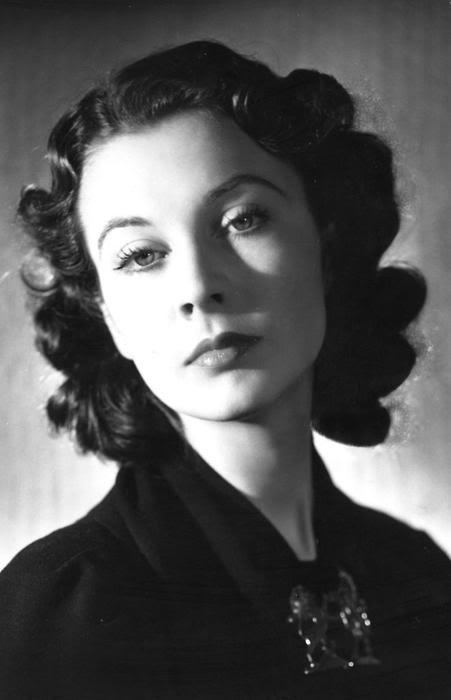
Vivien Leigh Will Never Be Mousy


We never actually got to see Vivien Leigh take on the role of the shy, shrinking Mrs. DeWinter in Rebecca. She wanted the part very much, more because it offered the chance to play opposite her lover Laurence Olivier than for its dramatic potential. But even though Selznick and Hitchcock humored her with a screen test, they both agreed that she was all wrong. It wasn't even a close call. According to Hitchcock himself, Leigh was "uniquely strong," a bold, determined woman who was "absolutely right to play Rebecca but Rebecca never appears in the film." Instead, Joan Fontaine got the part, winning both an Oscar nomination and an A-list career.

There's a surplus of explanations for why Leigh never fit the role. She was too ravishingly beautiful and raven-haired to be believable as an awkward girl trying to melt into the wallpaper. Her sexual attraction to Olivier was too obvious when they worked together; nobody would buy them as as an estranged married couple. Or, as Hitchcock put it, she was just too strong, too much of a Rebecca. All very good reasons. Except...does it really explain everything? After all, Fontaine herself was the polar opposite of Mrs. De Winter in real life. She was witty, sharp, and more than capable of shoving off her troubles. And while it's plainly ludicrous to imagine Vivien Leigh cursing her lack of beauty, is it really that much more believable when it's Joan Fontaine

The other reason I toyed with this one is that Vivien Leigh actually can play an innocent, awkward girl. Anyone who's seen her play Myra, the crushed-by-circumstance young lover in Waterloo Bridge knows she's capable of more than devious minxes and psychotic beauties. I struggled for a long time, wondering why Leigh might find it easier to work her way into the head of the painfully innocent Myra and not the shy, naive Mrs. DeWinter. The conclusion I came to is that Leigh just can't play characters who don't ask for anything. Myra reaches for love with both hands and ends up rushing to her fate. Mrs. DeWinter is terrified of asking for anything from life. When you see Leigh talk to Olivier in the test, she's arch, even amused. She can't sell that timidity. In life she was a woman who never stopped grasping for more and if she was the same way on film, audiences can only be grateful we got the benefit of so many memorable, daring, desperate, impossible female characters.  Characters that remain unforgettable because they want so much and get so little in the end.

Monday, July 22, 2013

Barbara Stanwyck Blogathon, Final Day


We've come to the end of our road, folks. I can hardly believe it. I never dreamed, when I started planning this blogathon several months ago, that I would get the incredible response that I did. Each and every one of you has done phenomenal work here and I feel humbled that I got to be a part of it. I still need to finish up commenting on everyone's entries and I will follow up here with a proper congratulations and thank you to you all, but I want you to know now, that I appreciate you guys beyond measure and that you've made this an incredible blogathon.

Ladies of Leisure (The Girl with the White Parasol)

Ladies They Talk About (The Man on the Flying Trapeze)

The Mad Miss Manton (Close Ups and Long Shots)

Double Indemnity (Classic Movie Hub)

The Purchase Price (The Nitrate Diva)

Jeopardy (Pensamientos Filmicos)

Walk on the Wild Side (The Last Drive In)

Barbara Stanwyck: A Lady or a Liar? (The Great Katharine Hepburn)

Baby Face (Classic Movies)

Movie Review: Ladies of Leisure

Ladies of Leisure (1930)
directed by Frank Capra, starring Barbara Stanwyck, Ralph Graves

Even if you were born rich, you can still reach for the stars. Aspiring artist Jerry Strong (Ralph Graves) dreams of painting something that will capture the spirit of hope and longing. But inspiration is pretty thin on the ground when your whole life is made up of social engagements and obligations. His drunken friend Bill Standish (Lowell Sherman) wants him to give up ambition and settle down to a life of partying. His parents (George Fawcett and Nance O'Neil) and his snooty fiancee (Juliette Compton) just want him to settle down. 

Jerry's inspiration finally arrives in the unlikely form of Kay Arnold, a self-described "party girl" (Barbara Stanwyck). She isn't Jerry's type at all. She's blunt, sarcastic, and flirtatious, totally uninterested in grand ideas or great art. Yet Jerry sees something in her that makes him believe she could be the perfect model to represent hope. Kay accepts his strictly business offer, incredulous that this guy only wants her for some nutty experiment. His friends and family are aghast that he would spend time with someone so coarse. Jerry paints Kay over and over but becomes frustrated at her inability to understand what he's driving at.

Gradually, as Kay begins to see Jerry's sincerity and ideals, she falls haltingly and painfully in love with him. It's a love she knows will bring her nothing but misery. Because even if a guy could fall in love with her for real, how could a cheap, common girl like her ever make him happy?


The most popular image of Barbara Stanwyck is of a tough, independent gal that takes no prisoners. The kind of woman that can plot murder or sex with equal authority. But that's an ideal that had to be built up over time, over decades of slinky femme fatales and gritty Western heroines. Much like her friend Joan Crawford, Stanwyck became immortalized as the polished, mature, indomitable creature she played in the 40s and 50s. But look back into her early 30s work and a softer, more vulnerable image emerges. She was typed as a girl from the wrong side of the tracks, hungry for wealth and security, but almost masochistically eager to risk everything for love. The Stanwyck of the 30s was always having to sacrifice something. Whether it was giving up her child (Stella Dallas, Forbidden), her ideals (Internes Can't Take Money, The Miracle Woman, The Bitter Tea of General Yen), or her love (Always Goodbye, Ladies of Leisure), Stanwyck did it without flinching. 


Ladies of Leisure is one film where the style is so great, it creates the substance. The plot is no different from a half-dozen other tearjerkers Stanwyck would go on to make through the decade. Bad girl trying to make good, callow love interest that can't know the truth of her past, and the society snobs that threaten to destroy everything. What sets it apart first and foremost is the remarkably romantic and assured direction by Frank Capra. His focus, for most of the movie's 99 minute running length is the couple and the dreamy, almost hermetic world they create for themselves apart from society. As Barbara Stanwyck's character is gradually drawn to the high-flown idealism of Ralph Graves' artist, he in turn is touched by the depth of her feelings. While they try to bring Graves' imagined masterpiece to life, Capra isolates them, bringing in other characters only when raucous distraction is required. It's an unusual approach for a 1930 film; most melodramas of the time were shorter, snappier, and more eventful. But here, you can see Capra putting into practice an idea he would perfect in The Bitter Tea of General Yen and It Happened One Night. Let the couple alone and watch what happens. The drama is in the characters, not what happens around them.

Capra wouldn't be able to accomplish this without the incredible help of Joseph Walker, his cinematographer. Walker collaborated with Capra on eighteen films; his camera work was the perfect match for the director's lofty ambitions. To capture Barbara Stanwyck's unusual beauty, Walker keeps her backlit for closeups, letting the light linger in the curls of her hair and around the contours of her body. But the effect wasn't just for Hollywood glamor. Capra pointedly has a scene where Ralph Graves, acting as Capra's surrogate, strips off Stanwyck's makeup, ordering her into simpler clothes, snapping, "Be yourself!" To which Stanwyck answers testily, "Then what the devil are you trying to change me for?" Graves tells her, "I'm not trying to change you, I'm trying to paint you." Capra and Walker draw the same distinction with their actress, worshiping her face while still trying to let that direct, honest Stanwyck spirit shine through.


Stanwyck's performance here is especially fascinating because it's evident that Stanwyck was learning herself through this film, deciding what techniques to keep and what to discard. She throws in lots of little tricks and mannerisms in Ladies of Leisure that she would never use again. For example, in a scene where Graves forcefully pulls off a fake eyelash, Stanwyck gives a drawn-out sigh that sounds like nothing in nature. It's halfway between a girlish squeal and an accordion. Later, as she argues with Graves, she snaps, "Goody goody goody, let's fight," complete with cute little fist smacking. None of these quirks hurt the performance and for this long-term Stanwyck fan, it's a lot of fun to see Stanwyck before she became such a superb, controlled technician. She's so loose and unpredictable here and both she and her character feel as if they're rushing heedlessly into something they barely understand.

Kay Arnold is a character whose wisecracks are only a flimsy protection against hurt. When she does fall in love, it's an emotion that registers more as great pain than great joy. In a lacerating scene, Kay makes breakfast for an ungrateful Jerry. At first, she watches in adoring silence as he silently reads the paper. Then a tear rolls down her cheek. She pushes a vase with a single flower closer to him, like an acolyte making an offering. Jerry doesn't see it and knocks the thing over. When he finally looks up, he irritably shoves the vase aside. Kay almost breaks down. When Jerry glances at her, she tries to cover by tossing food in the air and catching it in her mouth."Can you do that?" she asks him, nearly sobbing even while she's laughing. Now stripped of her defenses, she's helpless in the face of love, mocking herself even as she angles for the slightest scrap of affection.

This is the movie that made Barbara Stanwyck a star. Her actual first film, The Locked Door, was like an object lesson in every way a melodrama can go wrong. A contrived plot, bizarre performances (by actors struggling with the technical constraints of the early talkies), and misguided attempts to be titillating, including a scene with Stanwyck in an artfully torn dress, holding a gun. Ladies of Leisure shows how the genre can be given real emotion and complexity, allowing time for character and feeling. And Stanwyck shows what she can really do. In his Stanwyck biography, The Miracle Woman, Dan Callahan awards her an alternate Oscar for Best Actress of 1930. Looking at her performance here, I'd have to agree.


Ralph Graves falls somewhere in the low-mid range of Stanwyck's leading men. He's too stiff and dour for the role of idealistic artist Jerry Strong and as an actor, he hasn't a prayer of coming within Stanwyck's league. It's like taking your eyes off a great dancer to stare at the polished hardwood floor under their feet. You imagine someone like Lew Ayres playing the conflict between Jerry's dreams and his guilty desire to escape back into upper-class ease and Ladies of Leisure falls into place as one of the best romances in Stanwyck's career. 

However, Graves' cold immobility kind of works for the first half of the movie. It's very hard to sense what he really feels for Kay and makes Stanwyck's tentative love for him all the more fragile. In a scene where he stands over Stanwyck's bed and she pretends to sleep, there's a split second where it almost looks like Graves intends to rape her. The immediate revelation that no, he just wanted to tuck a blanket around her is a moment of pure grace and relief. That said, when Jerry does admit his love for Kay, the transition feels too abrupt to be real. It's as if we spent most of the movie with a grumpy, petulant Mr. Hyde and now we're confronted with a grinning, blindly romantic Dr. Jekyll.


Ladies of Leisure keeps such an intense focus on the relationship between Kay and Jerry that the supporting cast function solely as satellites. Marie Prevost makes the strongest impression as Kay's ditzy, loyal friend Dot Lamar. Dot's really the only ally Kay has in the film (Jerry may love her but boy does he make her pay for it) and her kindness keeps the movie from tilting too far into maudlin misery. There's a lot of cracks about Dot's weight but Prevost thankfully plays her as someone happy and confident in her attractiveness. You wish it could have gone that way in real life for Prevost. Lowell Sherman's also a joy as the perpetually drunk layabout Bill, Jerry's dishonorable friend. He may be a sleazy guy trying to put the moves on Kay ("Take a good look, it's free," Stanwyck snaps at him), but Sherman's comic timing is so good, I still kind of wanted him to find not-so-true love with Dot. 


Juliette Compton, as Jerry's fiancee Claire, is breathtakingly snobbish, ordering Stanwyck to turn around for her so that she can get a good look at Jerry's new model. Stanwyck raises her eyebrows but does a slow turn, her humiliation obvious. The Stanwyck of later films would have told her to stick it where the sun don't shine. For some reason, Claire disappears halfway through the film, never to be mentioned again. Jerry doesn't even have to dump her, she just vanishes. But then, Jo Swerling did say he wrote the script for Ladies of Leisure in a breathless five-day writing binge, "interrupting the writing only long enough for black coffee, sandwiches and brief snatches of sleep."

The real weak link of the cast is acclaimed stage actress Nance O'Neil, as Jerry's mother. In a scene that could be cut and pasted to a dozen different 30s melodramas, she goes to Kay and begs her to give Jerry up. But of course, she has to pretend not to love him or he'll never accept it. This Camille-lite garbage really drags down the film's climax since there's no plausible reason why Stanwyck's character should be swayed by O'Neil's cliched speeches. And O'Neil's acting is pure Victorian theater training, hopelessly outdated. All tragic nobility, hands-clasped sentiment, and low, "thrilling" voice.

But Stanwyck manages to save the scene with a single line. After O'Neil has made her case, choking back a sob and saying, "I must fight for him. That's what mothers are for," Stanwyck simply answers, "I wish I had one to fight for me."


Ladies of Leisure isn't a perfect film but for this Stanwyck fan, it's just like Austen's Emma, "faultless in spite of all (its) faults." It's romantic, it's strange, it's lovely, and it has a compelling lead performance by a woman that would go on to become one of the greatest stars in cinematic history. No Stanwyck library is complete without this one.


Favorite Quote:

"Do I look like a small cup of coffee?"

Favorite Scene:

The scene where Jerry goes to cover Kay with a blanket. Capra keeps the rhythm of the scene achingly slow, with Stanwyck trying to sleep and the rain beating gently against the windows. Capra always said he found rain romantic and uses the image of it here to effectively seal the lovers off in a private world of their own. Walker takes advantage of the rain to cast a flickering play of light and shadow on Stanwyck's expressive face, as if her thoughts are changing with every raindrop. Kay hears Jerry's footsteps at the door and you can see the realization dawn on her face that the man she cares for is just coming to use her, like every other man she's known. She closes her eyes, pretending to sleep. Then she feels, Jerry drawing the blanket over her and Capra cuts to a simple shot of his feet, walking away. Cut back to Kay, radiant with delight. In a gesture she would find again for Stella Dallas, Stanwyck bites the blanket with her teeth and stares up at the ceiling, smiling (in an earlier scene she had mocked Jerry for making her stare raptly at a ceiling). It's a blissfully sweet and sensual scene that captures the moment when a cynical, broken woman gives herself over completely to love.

Final Six Words:

Stargazing romance with transcendent Stanwyck performance

Sunday, July 21, 2013

Barbara Stanwyck Blogathon, Day 6


 Barbara's friends have all turned up to wish her a very happy Blogathon!

Day 6 of the Barbara Stanwyck Blogathon is shaping up to be gloriously offbeat. Seriously, I can't think of a single unifying theme for this group of films other than "Barbara Stanwyck is awesome." We've got William Castle horror, Frank Capra melodrama, Robert Taylor romance. None of these films rank among Stanwyck's most famous or celebrated but taken as a whole, they reveal her incredible gift for creating strong-willed, engaging heroines, whether they're supporting a square-jawed hero or fighting for their own place on center stage.

This is My Affair (Crítica Retrô)

Banjo on My Knee (True Classics)

Clash by Night (Silver Scenes)

Forbidden (Shadows and Satin)

The Night Walker (WeirdFlix)

Meet John Doe (The Joy and Agony of Movies)

"Babs in the Boardroom" (Second Sight)

Saturday, July 20, 2013

Barbara Stanwyck Blogathon, Day 5

"I'm a tough old broad from Brooklyn. I intend to go on acting until I'm ninety and they won't need to paste my face with make-up."
Some great performers can get very miserly with their talent, hoarding it up like gold and only spending it on Oscar-worthy films. Some lose their courage and stop trying new things. Some becomes caricatures of themselves. One of the wonders of being a Stanwyck fan is that even through eighty-plus movies, there's never a period where you have to avert your eyes and mumble excuses for her. Stanwyck stayed true to herself all the way from the sentimental fantasies of Always Goodbye to the homely Western comforts of The Big Valley. Today runs the full gamut of Barbara Stanwyck's career. Enjoy!

My Reputation (Portraits by Jenni)

Ball of Fire (Old Movies Nostalgia)


Union Pacific (The Kitty Packard Pictorial)


A Taste of Evil (3B Theater: Micro-Brewed Reviews)


The Big Valley (Hamlette's Soliloquy)


Always Goodbye (Movie Classics)


Crime of Passion (Running After My Hat)

Friday, July 19, 2013

Barbara Stanwyck Blogathon, Day 4


Time to take a cool plunge into the pool with Barbara Stanwyck. Today belongs to the "ladies." That is, those gambling, card-sharping ladies your mother warned you about. We take an exciting side trip into the lands of film noir, with an added dose of wife murder to keep things interesting, and complete the journey with a look at Stanwyck's fascinating and underrated collaboration with Douglas Sirk. Jump in, guys!
  
The Lady Eve (Classic Movie Hub)

Gambling Lady (Immortal Ephemera)

These Wilder Years (Citizen Screen)

The File on Thelma Jordon (Krell Laboratories)

Trooper Hook (Vienna's Classic Hollywood)

All I Desire/There's Always Tomorrow (Pensamientos Filmicos)

The Two Mrs. Carrolls (The Last Drive In)

Thursday, July 18, 2013

Barbara Stanwyck Blogathon, Day 3

I have to admit, the Stanwyck-Taylors looked incredibly cute in photos

It's Day Three, folks, and the fans show no signs of slowing down! Today looks to be pretty eventful, with a generous helping of film noir to start us off. From there, we move on to Willa Cather adaptations and TV shows, to sharpshooters and troubled violinists. And that's still only the beginning, we've got four more days of Stanwyck to enjoy!

The Strange Love of Martha Ivers (Silver Screenings)

Witness to Murder (Who Can Turn The World Off With Her Smile?)

A Lost Lady (Tinseltown Royalty)

The Barbara Stanwyck Show (Caftan Woman)

Annie Oakley (Silver Scenes)

Golden Boy (Hollywoodland This N That)

Blonde Barbara Stanwyck in Double Indemnity (Film Noir Blonde)

Wednesday, July 17, 2013

Barbara Stanwyck Blogathon, Day 2


The second day of Barbara blogging is set to be an exciting one. First, we're treated to a little holiday cheer (in July) with Christmas in Connecticut. Then Ivan hauls us onto the dusty plains along with Forty Guns, we make a side-trip into the wilds of TV soap opera, and we end up shivering on the decks of the Titanic. Fittingly, the day ends with a look at the partnership that launched Stanwyck's career, the teaming of Frank Capra and Barbara Stanwyck. Without Frank Capra, there might not have been any Stanwyck film career. That's a thought more terrifying than the image of Stanwyck brandishing a gun in Crime of Passion.

Christmas in Connecticut (A Person in the Dark)

Forty Guns (Lerner International Enterprises)


Stanwyck and Dynasty (Wide Screen World)

Titanic (Noir and Chick Flicks)


Capra and Stanwyck (The Motion Pictures)


ETA: By the way, I've been informed that there's a new website in town, completely devoted to Barbara Stanwyck! It's called Barbara Stanwyck the Queen. You can find it here. I haven't had much of a chance to explore the site yet, but you can bet I'll soon be a regular visitor. The site's got forums, a blog, gifs, a complete Stanwyck filmography, magazine articles, quotes, photo galleries, basically everything a Stanwyck fan needs to be in utter heaven. Check them out!

Tuesday, July 16, 2013

Barbara Stanwyck Blogathon, Day 1


And we're off to the races! The Barbara Stanwyck Blogathon has officially begun. It's off to a fantastic start too, with a slew of great writers tackling everything from Stanwyck's sparkling costumes to her status as femme fatale supreme. There's a lot to enjoy here so let's get started. Barbara and the puppy want you to click these links! And leave comments for these immensely talented bloggers. Have fun, all.

July 16

No Man of Her Own (Vienna's Classic Hollywood)

Remember the Night (A Thousand Words)

Sorry, Wrong Number (Thrilling Days of Yesteryear)


The Miracle Woman (Pre-Code.com)


Lady of Burlesque (3B Theater: Micro-Brewed Reviews)


Stanwyck the femme fatale (The Scarlett Olive)


Barbara Stanwyck: an appreciation (The Hitless Wonder Movie Blog)


Stanwyck's costumes in Ball of Fire (Stardust)


The ageless Barbara Stanwyck (A Shroud of Thoughts)

Wednesday, July 3, 2013

The Barbara Stanwyck Blogathon Schedule is Posted!


Wonder why Barbara's smiling? Well, she's got good reason. A whopping 49 film bloggers have signed up for the Barbara Stanwyck Blogathon this summer!

While I can't speak for the lady herself, I have a pretty good idea that she would be truly touched and honored to see how much the people love her, over twenty years after her passing. Barbara Stanwyck was not the kind of actress that campaigns for praise or glories in adulation. She wasn't America's sweetheart, she wasn't a sex symbol, and she wasn't a great lady of the theater. She was a woman that went to work every day and gave it her all and if Stanwyck knew she was a genius (as I'm sure she did) she never let it get in her way. She was brilliant right up to the end. And from July 16 to July 22 this year, we're going to give her one hell of a celebration.

For those of you who've been wondering about my long silence this past month, rest assured that I haven't just been sitting around munching chips and reading The Lone Ranger reviews. Aside from real-world stuff, I've been gearing up for the blogathon by brushing up on my Stanwyck knowledge. That means reading the Stanwyck biographies. That means fighting my way through Stanwyck's formidable filmography of 85 movies. Not to mention her TV shows and guest appearances. I haven't gotten through all of it and I probably won't by the time of the blogathon. I may love Stanwyck beyond all reason, but I do have to pay rent. Still, it's been an incredible joy to spend quality time with her this summer and I've emerged from the experience, an even more devoted fan.

The big news today is that I've posted the schedule for the blogathon. Bear in mind that it is a preliminary schedule, that's all. For those of you that have requested a specific date, you have it. For everybody else, I've tried to arrange the dates so that every day has a good mix of movie genres and topics. I hope I've come up with something workable for everybody.

That said, you can still request a date. Just comment here or email me if you'd like to change to another day and I'll move you around.

For those of you that requested more than one movie, I've tried to arrange the schedule so that each movie gets its own post. If you're down for two movies, than I've put you down for two separate dates. Please go through the list and see where your blog is posted. I chose to do this on the assumption that it would be more difficult to post multiple movie reviews on the same day. If however, that is what you were planning to do and you'd prefer to just do one big post, let me know and I'll change your entry date. No worries.
 

Before I show you the schedule, let me try to answer some standard blogathon questions.
 

I don't want to write about this topic any more. Can I switch?

Course you can. No problem. Drop me a line and I'll change it for you.

Things have changed and I've just been so busy this summer and I won't be able to write for the blogathon after all. Is that okay?

Don't worry, I won't go all Phyllis Dietrichson on you. All of us have to deal with a world outside of blogging and there's no shame in having different priorities. Just let me know and I'll take you off the list. 

I still don't know my topic! But I still really want to write for the blogathon!

Then take your time. The only reason I collect blogathon topics ahead of time is so that we get a good mix of movies. You've still got from now until the blogathon to decide.

I haven't signed up for the blogathon but I want to! Are you still accepting entries?
 

Sure. Again, just let me know in the comments section or by email and I'll add you to the list.
    

The Barbara Stanwyck Blogathon Schedule

July 16

July 17

July 18

July 19

July 20

July 21

July 22


Stay tuned for more updates, guys!

ETA: For those of you that need to talk to me about post topics/scheduling/anything else blogathon-related, you can always reach me by email at adams.are@gmail.com.